Originally published 2026-01-13. This article reflects the market and media context at the time of publication.
The traditional model of professional education in the media industry is broken. For years, CMOs and media directors have relied on academic-led certifications or platform-specific training that, while theoretically sound, fails to survive first contact with a live campaign. In an era where 44% of marketers cite improved audience targeting as the primary benefit of data collaboration, yet struggle with the "signal loss" of a post-cookie world, the gap between theory and practice has become a strategic liability. We are no longer in a market where "understanding the basics" is enough; we are in a market where the ability to navigate complex data ecosystems determines the survival of the brand.
At ReMOTIVE Media, we’ve observed a recurring frustration among procurement leads and marketing executives: talent that is "certified" but not "capable." They understand the definitions of CTR and CPM, but they lack the intuition to know why a specific household-level data set outperformed a lookalike model in a high-stakes automotive launch. They know what a "model" is in a textbook sense, but as our internal data science teams often note, they don't know how to bridge the gap between a data scientist’s technical output and a creative director’s strategic vision. This disconnect is where budgets are wasted and opportunities are lost.
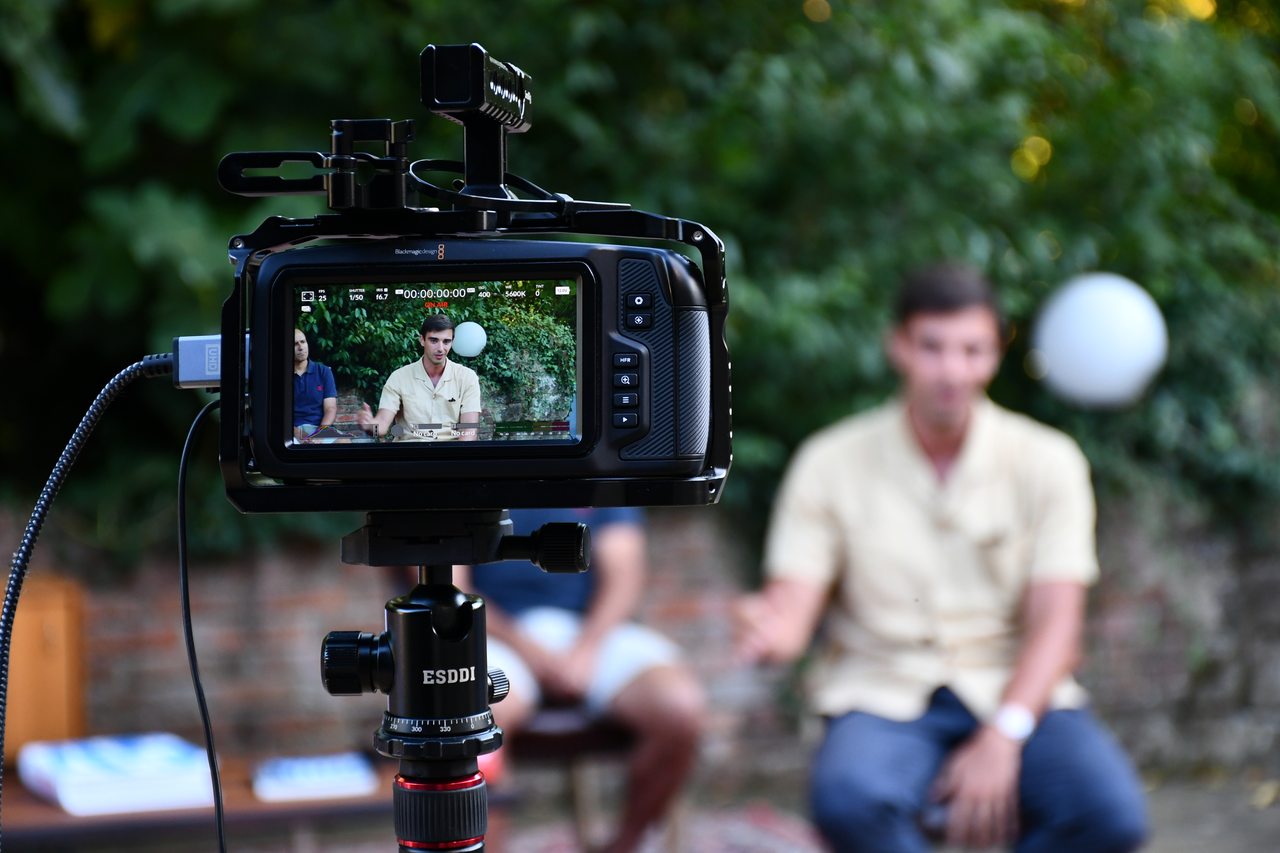
This realization led to the evolution of the ReMOTIVE Academy. We didn't want to build another digital library of static videos. We set out to transform the practitioner’s daily reality into a platform for self-directed learning. By codifying the actual workflows, failures, and breakthroughs of our London and Asturias teams, we are moving beyond education and into the realm of operational intelligence. This isn't just about learning media; it’s about mastering the "Making Different Happen" philosophy that defines our agency.
The Practitioner’s Edge: Why Theory Is No Longer Sufficient
The media landscape is shifting too fast for traditional curriculum development cycles to keep pace. By the time a textbook is printed or a standard university course is accredited, the underlying technology has shifted. Consider the rise of Humanized Intelligence. While many courses treat AI as a futuristic concept or a simple automation tool, our practitioners are using Moti, our conversational AI agent, to orchestrate six different AI models in real-time campaign optimization. A student in our Academy isn't learning about AI in the abstract; they are learning how we used AI to identify a 360-degree view of a consumer’s household-level behavior for a major EMEA automotive client.
Every module in the Academy is authored by the very people running these campaigns. This matters because a practitioner understands the nuance that an academic misses. For example, in our data collaboration modules, we don't just talk about "first-party data." We dive into the "nitty-gritty" of how to take transactional data—like knowing someone spent 10 GBP at a supermarket—and cross-referencing it with property data to determine if they have a garden, thereby validating their propensity to buy outdoor power equipment. This is Data by Design in action: it’s the practical application of disparate data sources to solve a specific business problem.
Furthermore, our curriculum is rooted in our proprietary OESP (Objective → Ecosystem → Strategy → Plan) framework. Most training starts at the "Plan" stage—what buttons to click in a social media manager. We start at the "Objective." We teach our students how to interrogate a CMO’s business goals before a single dollar is allocated. This shift from execution-first to strategy-first is the hallmark of a consultant-level media professional, and it is a skill that can only be taught by those who do it every day for global brands.
From Silos to Synthesis: Bridging Data Science and Strategy
One of the greatest hurdles in modern media is the language barrier between departments. In our internal discussions, we often reference the "What's a model?" moment—a scenario where a data scientist and a designer are using the same words to mean entirely different things. This friction slows down execution and dilutes strategy. The ReMOTIVE Academy is designed to be the "Rosetta Stone" for these teams.
Our modules are built to facilitate Data Collaboration. According to recent industry research from Lotame and Cint, the most reported benefit of data collaboration platforms is enhanced personalization at a granular level (42%). However, achieving this requires a team that understands how to integrate open-source data with private transactional records without compromising privacy. Our practitioners teach this through the lens of "Privacy by Design," ensuring that every strategy is not only effective but future-proofed against evolving regulations.
"The more you collaborate, the more you get comfortable with different types of people and understanding their process. For each team, that takes a bit of time to develop. We use the Academy to accelerate that timeline."
By bringing real-world examples into the learning environment—such as how we use our FOLLOW and RIVAL platforms to track competitor intelligence and audience movement—we provide a sandbox where learners can see the direct impact of their strategic choices. They aren't just looking at charts; they are looking at the same dashboards our media directors use to pivot campaigns in London. This level of transparency demystifies the "black box" of programmatic buying and empowers the learner to make data-backed decisions with confidence.
The OESP Methodology: A Blueprint for Self-Directed Growth
At the heart of our practitioner-led learning is the OESP methodology. This isn't just a framework for our clients; it is the pedagogical backbone of the Academy. We believe that a media professional’s value is directly proportional to their ability to navigate these four pillars:
- Objective: Moving beyond vanity metrics (likes, impressions) to business outcomes (conversions, brand equity, market share). We teach learners how to extract the "true north" from a complex brief.
- Ecosystem: Understanding the environment. This involves using tools like RIVAL to map out the competitive landscape and identify gaps in the market that others are overlooking.
- Strategy: This is where the "Humanized Intelligence" comes in. We show how to use AI-native tools to synthesize data into a cohesive narrative that challenges conventions.
- Plan: The tactical execution. Using ReMOTIVE Connect, we demonstrate how to deploy full programmatic campaigns across EMEA with precision and scale.
By following this structure, Academy participants move from being "button-pushers" to becoming strategic advisors. They learn that media is not a commodity to be bought, but a lever to be pulled. This perspective is vital for procurement leads who are looking to maximize the ROI of their agency relationships. When your internal team speaks the same strategic language as your agency, the friction of "managing" the relationship disappears, replaced by a partnership focused on growth.
Why You Should Care
- Eliminate the Skills Gap: Traditional training leaves your team 12-18 months behind current market capabilities. Practitioner-led learning ensures they are working with the same tools and strategies used by top-tier agencies today.
- Operational Efficiency: By adopting the OESP framework, your team reduces the time spent on misaligned "plans" and focuses on strategies that actually meet business objectives.
- Data Sovereignty: Understanding how to transform cookie-based audiences into first-party household data is no longer optional. The Academy provides the technical roadmap to achieve this 360-degree consumer view.
- Strategic Autonomy: Empower your media and marketing directors to challenge agency proposals with confidence, grounded in a deep understanding of current programmatic and AI capabilities.
- Future-Proofing: As privacy regulations tighten, the ability to execute "Privacy by Design" strategies (as taught in our modules) protects your brand from reputational and legal risks.
Action Points
- Audit Your Current Training: Evaluate whether your team’s current certifications are based on platform-specific "how-to" guides or strategic "why-to" frameworks. If they can’t explain the Objective behind their Plan, there is a gap.
- Identify Jargon Silos: Conduct a cross-departmental meeting between your data, creative, and media teams. Identify terms (like "model" or "attribution") that are being misinterpreted and use the Academy modules to standardize your internal language.
- Implement a Practitioner-First Pilot: Transition a small group of your media planners or procurement leads through a ReMOTIVE Academy module focused on Data Collaboration. Measure their ability to apply those specific insights to an upcoming Q3 or Q4 campaign brief.
The transition from practitioner to platform is about more than just sharing knowledge; it is about building a new standard for the industry. In a world where everyone has access to the same tools, the competitive advantage lies in how you use them. At ReMOTIVE Media, we aren't just making different happen for our clients—we are giving you the blueprint to make it happen for yourself.
Publication record
Originally published 2026-01-13.